|
 Paper Shredder Quilt by Kevin Kosbab.

Zip Zip Purse by Rebecca Kemp Brent.

Circuit Scarf by Kevin Kosbab.
|

|
Getting Stitchy With It
Sometimes
it's fun to think of your machine as a drawing tool and use machine
stitching as a design element. All you need is a walking foot, and you
are off and running. Even simple contrast topstitching or machine
quilting can add texture and graphic appeal to a project. And the best
part is that you can incorporate it into any project, from accessories
and toys to quilts and clothing. Whether you choose to use a little or a
lot, you have lots of fun options for how to incorporate stitching into
your next project.
For example, the Paper Shredder Quilt
by Kevin Kosbab uses machine quilting to great allover effect by
highlighting the angular piecing in his design by stitching
crisscrossing lines on his quilt top. He extended each line across the
entire quilt top at random angles, then pivoted at the edges to continue
in a different direction. While Kevin did his stitching freehand, to
ensure straight lines every time, you can sew along the edge of masking
tape adhered to the quilt top.
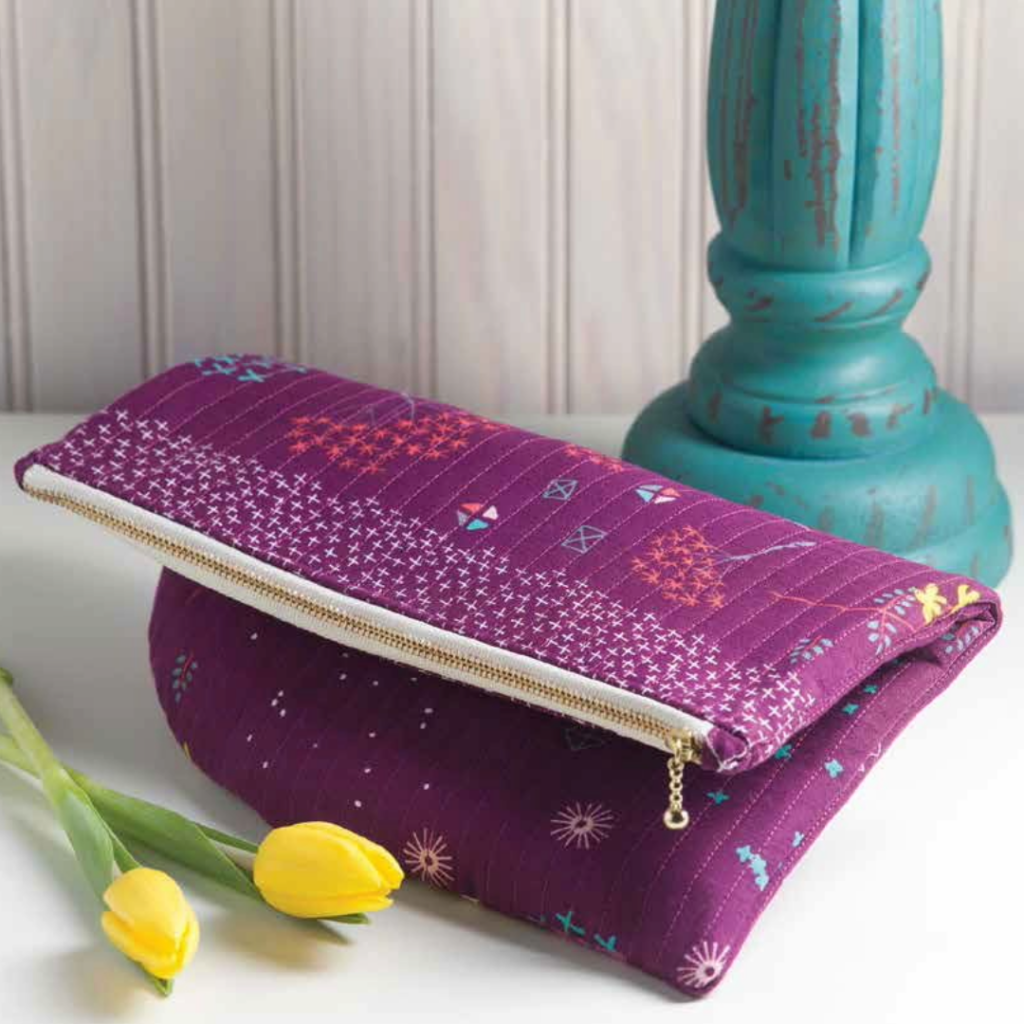
Sometimes a little bit of machine stitching goes a long way as seen in the Zip Zip Purse
by Rebecca Kemp Brent. On the peek-a-boo insert, Rebecca alternated
between straight and zigzag stitches in each row, with the zigzagged
areas randomly offset from row to row. Alternatively, you could feature
some of those fancy decorative stitches programmed into your machine. If
you use a denser stitch pattern, use a layer of tear-away stabilizer
under the interfaced fabric (remove the excess stabilizer after
stitching). Rebecca also sewed a decorative stitch pattern centered over
the edge of the zipper tapes. This allowed the stitching to extend onto
the sides of the purse, echoing the lines of the exposed zipper.
Try adding some dimension to your machine stitching by using a couching effect as shown in the Circuit Scarf
by Kevin Kosbab. Couching is a technique for tacking down one or more
laid threads or fibers onto a fabric background, which gives you a
raised effect. Kevin couched lines of worsted-weight green wool yarn
along the length of his scarf to echo the look of circuit boards on his
geek-chic scarf. Use a cording foot to couch the yarn, or a narrow hem
foot can be used, running the yarn through the curl of the foot. To
achieve this same effect, mark your stitch lines and set your machine
for a zigzag stitch 3 mm long and slightly wider than the yarn. Thread
the needle with clear monofilament and fill the bobbin with thread that
matches the background fabric. Couch the yarn to the fabric along the
stitch guidelines. Sew slowly to make sure the needle falls just to
either side of the yarn. Lower the needle thread tension if loops of
bobbin thread appear on the fabric or if the yarn is flattened by the
top thread.
See how much you can do with thread! Check out the full instructions on these three projects in the Fall issue of Stitch
and get inspired to be creative with machine stitching in your next
project. I guarantee that once you start experimenting with thread,
you'll be hooked!
Happy sewing,