The Art of Stitch
Do
you ever feel like you are in a sewing rut? I feel that way sometimes
when I find myself making the same types of projects over and over, and I
need some inspiration to get me to approach my sewing differently or
add a new twist. When I'm stuck I often turn to textile art for some
out-of-the-box ideas. I love the way textile artists experiment and play
with fabric and thread, and you can find great ideas that can be
adapted or simplified to add interesting textures, shapes, layering, and
stitching to your projects. The next time you have a simple or plain
project you can use it as a canvas for some interesting creative
exploration.
|

Image from The Found Object in Textile Art. Red Onion, free machine and hand stitch.
|
|
|
|
|


Images from The Found Object in Textile Art. Top: Blue Flora. Layered vintage fabrics, dyed and printed, with yellow stitch detail. Bottom: Blue Flora detail.
|
|
|
|
It's
easy for me to get so project- and results-oriented that I never take
the time to just sample and play with fabric. This is a great way to
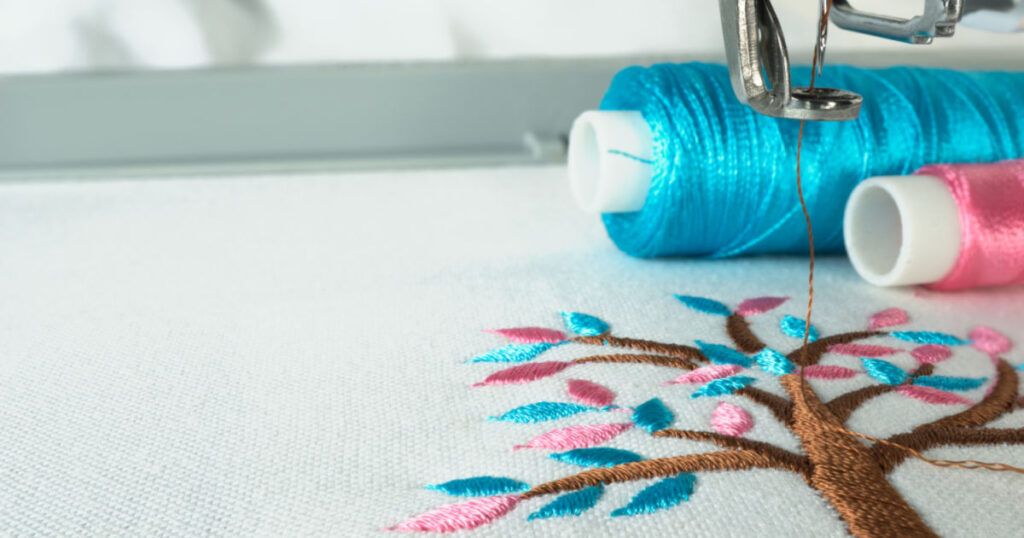
experiment with machine embroidery and hand sewing techniques, which add
interesting texture. And these stitch samples could later be
incorporated as a cool accent panel on a pillow or design detail on a
garment.
Lately, I've been flipping through textile art books, and two books that have provided some much needed inspiration are Drawn to Stitch by Gwen Hedley and The Found Object in Textile Art by
Cas Holmes. These talented authors really opened my eyes to the range
in interesting effects you can create with thread. Cas Holmes has a
great section in her book that I specifically responded to as she
encouraged readers to be more adventurous and consider the creative
possibilities of stitching. Here she gives some great jumping-off points
for experimentation:
Stitch possibilities
Stitching
is a technical necessity, holding the layers together, but the textile
artist can employ a wide variety of stitches, using both machine and
handstitching. When using stitch, consider the type of mark you make and
with what material. A sewn line on the machine is usually not
reversible, as it will leave its own palimpsest, a "shadow" of what went
before. This can contribute to the creation of apparently aged
surfaces, giving a sense of wear.
Be
adventurous and look beyond your usual threads. Electrical wire, paper
thread or raffia, and Indian cotton threads can be used for stitching. A
stapler can create an interesting row of marks. Consider each mark you
make as a line, not only to hold the work, but to add a visible element
of drawing.
Machine stitching
Experiment with different possibilities:
- Machine stitch sections before cutting them up and replanning them.
- Fold and crease work before stitching and make raised seams with machining.
- Leave long thread ends when machining and stitch these back into the fabric for a different type of mark.
- Place two threads into the needle before machine stitching or stitching by hand.
- With no thread in the machine, punch holes into surfaces with the
machine needle to leave a pattern or create wear in the fabric.
Handstitching
Basic handstitching techniques might include:
- Various linear stitches, such as running stitch, backstitch, kantha, and sashiko.
- Couching (useful to hold thicker fibers in place).
- Various embroidery stitches, to add as a decorative or featured
element, including cross-stitch, French knots, chain, seeding,
herringbone, and blanket stitches.
Working with stitch
Use more than one thread in the needle.
- Work the stitches close together or far apart and vary the dimensions of the stitches.
- Work stitches on top of one another, for density.
- Try wrapping and overstitching.
- Stitch down small scraps of waste material.
- Bring knots through to the front.
- Leave threads hanging.
- Stitch straight or curved lines or create patterns.
- Take a single stitch, such as a simple straight stitch, and see how far you can go with it.
These
are all very easy exercises and sewing techniques to try, and the
results will pump up the volume on your next project. So go looking for
some stitching inspiration and start exploring you artistic side. You'll
break out of that sewing rut in no time!
Happy sewing,